compsylabCOMPUTATIONAL PSYCHOLOGY

DR. MARTIN STEPPAN · FREELANCE CONSULTING

Understanding people.
Through data.

People Insights for organisations seeking evidence-based decisions about their people.

I combine psychological research with statistical analysis and AI — from defining the right question to insights you can put to work.

Discuss your project

My services support companies, insurers and other organisations with analyses of employees, health and organisational relationships.

People InsightsPsychometricsTalent ManagementArtificial intelligence
Dr. Martin Steppan
Dr. Martin SteppanPsychology. Data. Insights.
A face emerges from data points — a visual expression of People Insights.

DATA. PATTERNS. PEOPLE.

HOW I CAN HELP

Turning data into
practical decisions.

01

Employee turnover & workplace health

Understand what retains employees and which working conditions support their health.

  • Analyses of turnover, absence and working conditions
  • HR metrics and dashboards
  • Evaluation of workforce and health initiatives

Research background: my contribution to the Absenteeism Report 2013.

02

Employees & organisations

Understand what matters to employees and which changes would help.

  • Employee surveys and questionnaire development
  • Analyses of engagement and working conditions
  • Analysis of open-ended responses and workshops on findings

Methodological background for assessing measurement quality and validity: our psychometric evaluation of meinBeruf.ch.

Assessing personality in everyday life: our FFM-PSI study (2025) on developing and validating an instrument for repeated measurement of personality states.

03

Talent & assessments

Explore potential and career fit using psychologically grounded methods.

  • Personality, interest and competency profiles
  • Language-free assessment of cognitive abilities
  • Assessment of reliability, validity and fairness
  • Evaluation of AI-based matching methods

Research background: our study in Intelligence on test fairness and the importance of language-free assessments.

04

AI & People Insights

Apply AI where it helps us understand people and organisations, with transparent findings and expert interpretation.

  • Thematic analysis of open-ended survey responses and interviews
  • Develop and evaluate AI-based career and talent matching
  • Systematically assess output quality, bias and fairness

An example from our research: AI-based emotion recognition in psychotherapy — University of Basel article.

AI informed by psychological expertise.

I support you from selecting a suitable use case through to evaluation. We combine AI with statistical methods and human judgement, clarifying which data may be used, how findings can be checked and where their interpretation has limits.

SOCIAL NETWORK ANALYSIS · GEPHI

Making connections visible.

How are people, teams and organisations connected? I analyse social networks with Gephi, exploring collaboration, information flows, group structures and the people who connect them.

From planning a network survey and preparing relational data to metrics, visualisation and presentation of findings. Methodological background: my further training in Social and Economic Networks: Models and Analysis at Stanford University.

Illustrative network: scattered points form two groups in blue and orange. Points represent actors and lines their relationships; the data are illustrative.

BIOLOGICALLY INSPIRED AI · ANT COLONY OPTIMIZATION

From ant colonies to efficient assessment.

We also use AI and optimisation methods inspired by biological principles. In Ant Colony Optimization virtual ants explore possible solutions. Successful selections receive more pheromone; this trail influences subsequent search steps and fades over time.

In psychometrics, this approach can identify suitable items for a shorter questionnaire. Our LoPF-Q study (2022) uses this approach to select items based on model fit, reliability and clinical validity.

In our personality states study (Gander, Traut, Uhlich, Horstmann, Steppan, Ziegler & Grob, 2025) Ant Colony Optimization also contributed to developing the Five-Factor Model Personality States Inventory. The instrument assesses momentary personality states through repeated measurements. Psychology Today covers the study.

Blue pheromone trailOrange pheromone trailVirtual ants
Simplified simulation using illustrative data: one item is selected per dimension. Blue and orange show the trails of two search groups. This is not a display of study results.

AI & INTERACTION ANALYSIS

Exploring conflict dynamics in conversation.

Analysing interpersonal conflict with AI

An annotated interview with Robert Downey Jr. illustrates how AI can analyse facial expressions and the temporal dynamics of a conflictual interaction.

Our study on AI-based emotion recognition · Multimodal process analysis

Demonstration: automated classifications do not establish the emotions, intentions or personality of the people shown.

DASHBOARDS & REPORTING

Exploring complex data interactively.

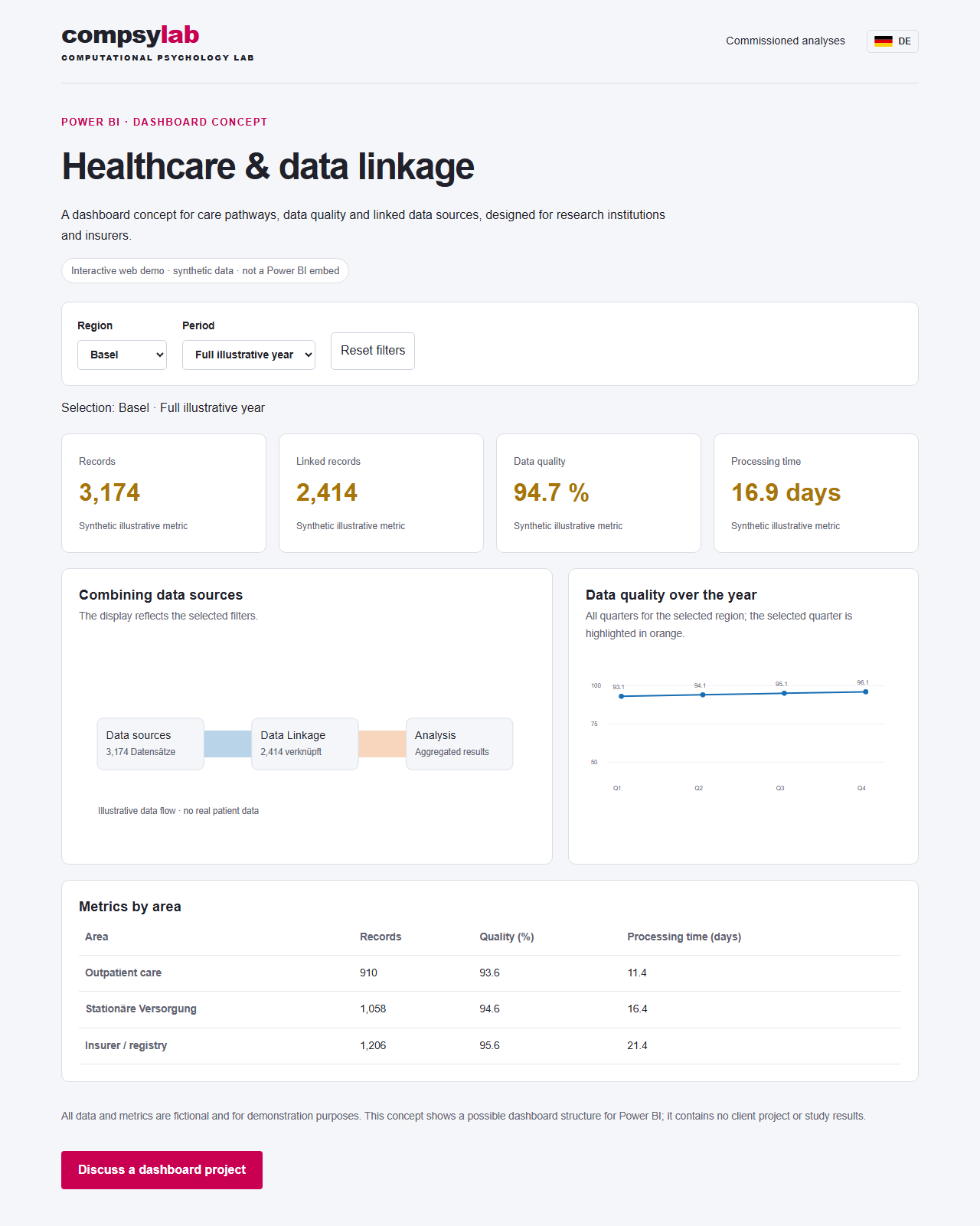
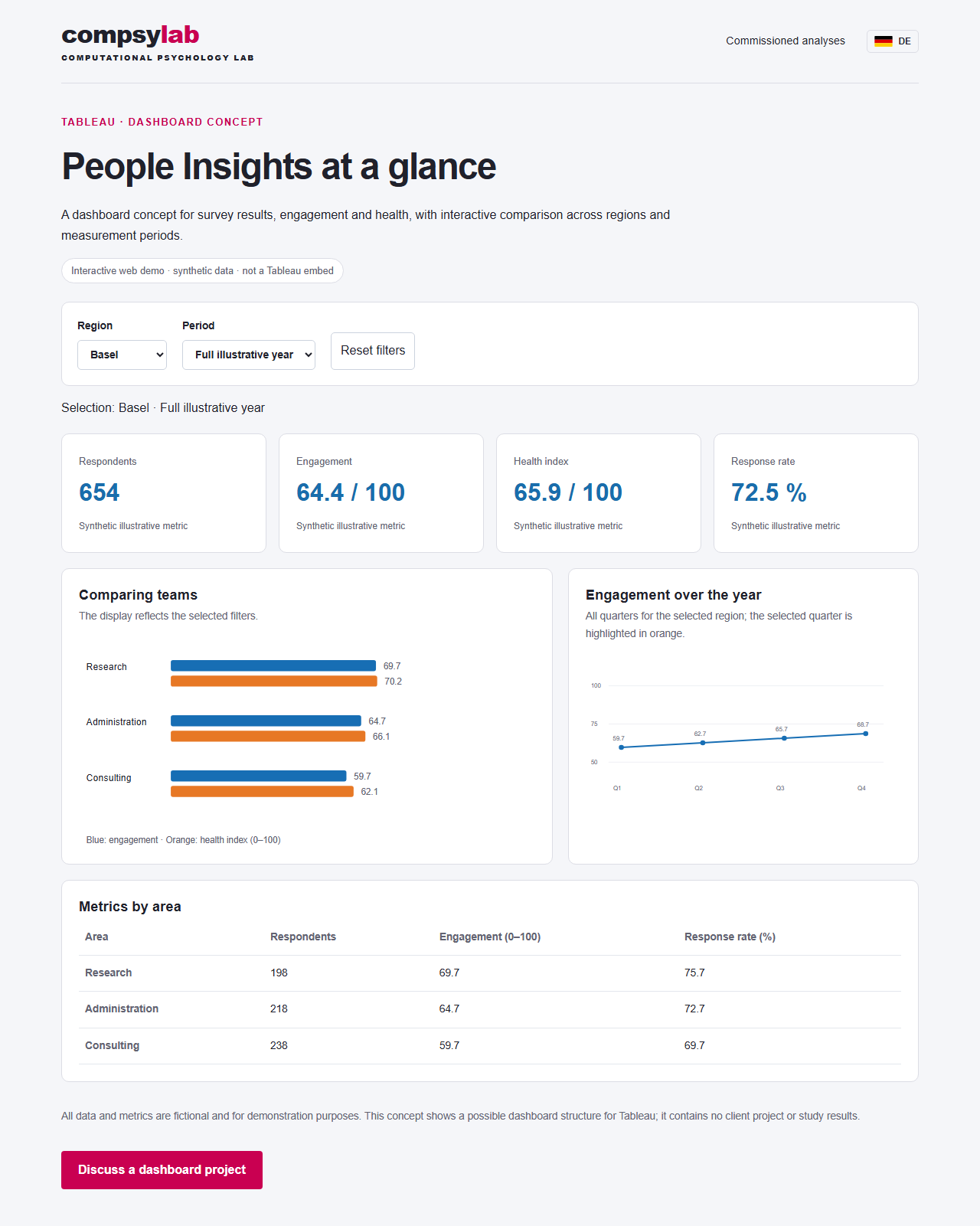
Two dashboard concepts for Power BI and Tableau, presented as interactive web demos with synthetic data.

RESEARCH FOUNDATION

Research informing practice.

TALENT MANAGEMENT & CAREER FIT · 2026

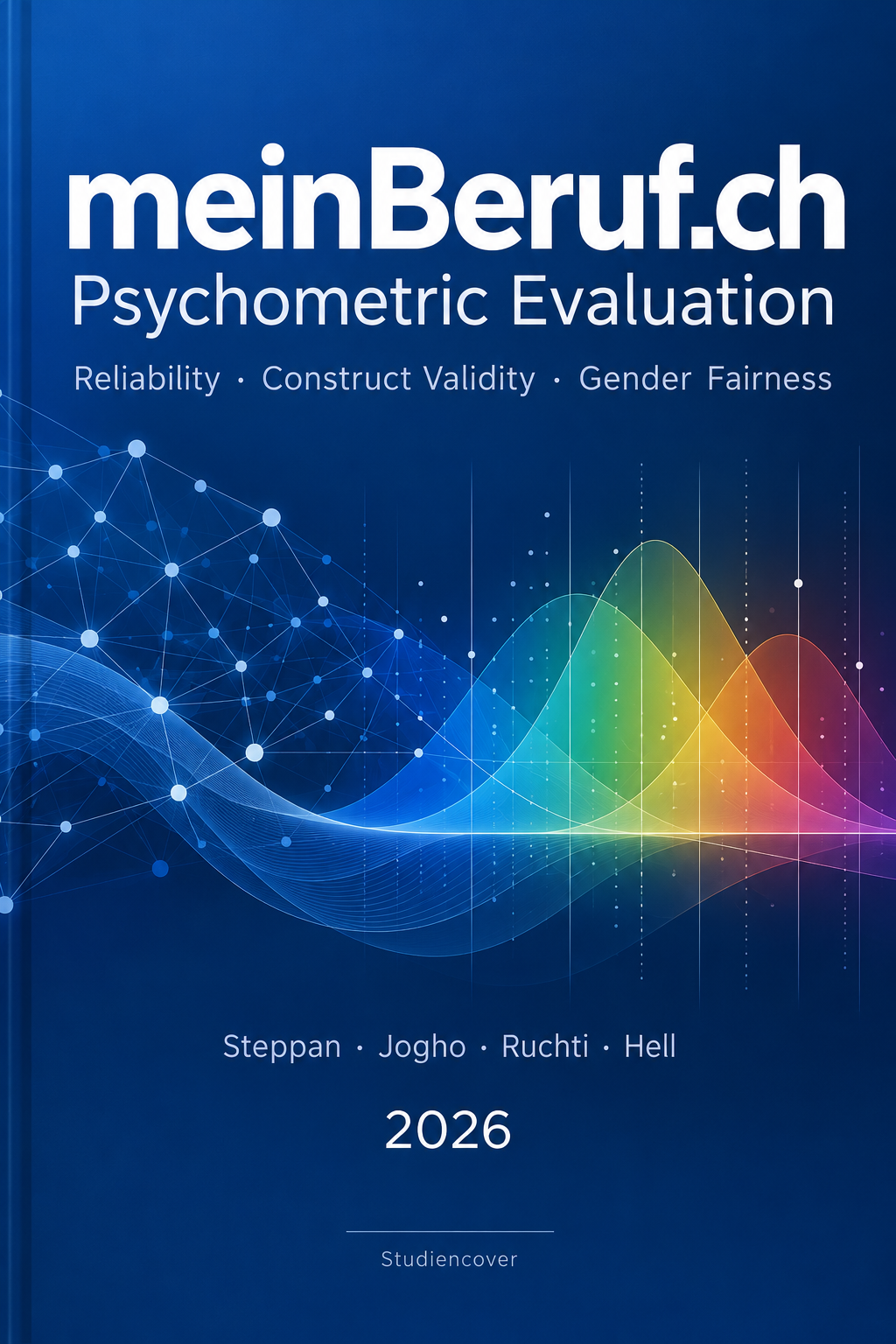
meinBeruf.ch — scientifically evaluated

Designed study cover: meinBeruf.ch — Psychometric Evaluation

How well does AI-based career matching perform? An evaluation with 914 users provides initial evidence on measurement quality, construct validity and technical gender fairness of meinBeruf.ch.

Long-term outcomes such as job satisfaction or career success have not yet been assessed.

Steppan, M., Jogho, G., Ruchti, I., & Hell, B. (2026). Psychometric evaluation of the AI-based career matching platform meinBeruf.ch: Evidence for reliability, construct validity, and gender fairness. Psychological Test Adaptation and Development, 7, 289–295.

Read the meinBeruf.ch study

Designed study cover for the journal publication.

TURNOVER & WORKPLACE HEALTH · 2013

Absenteeism Report 2013

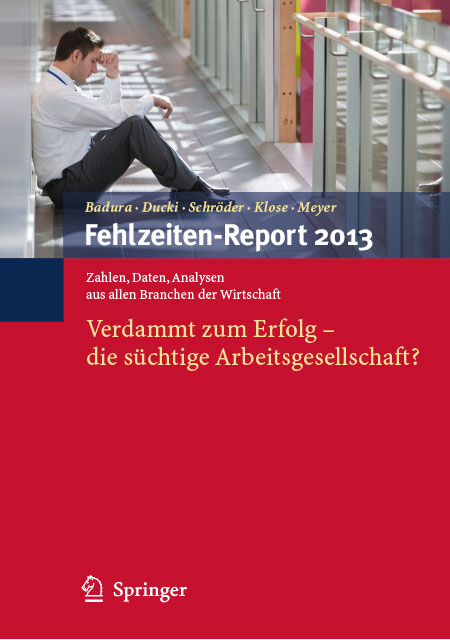
Book cover: Absenteeism Report 2013 — Condemned to succeed: an addicted working society?

Condemned to succeed — an addicted working society?

The 2013 Absenteeism Report explores addiction, its relevance to the workplace and health-promoting workforce policies.

With a contribution by Martin Steppan, Tim Pfeiffer-Gerschel and Jutta Künzel.
Edited by B. Badura, A. Ducki, H. Schröder, J. Klose and M. Meyer. Springer, 2013.

Read the Absenteeism Report

COGNITIVE ABILITIES & TEST FAIRNESS · 2024

Assessing cognitive abilities — reducing language barriers.

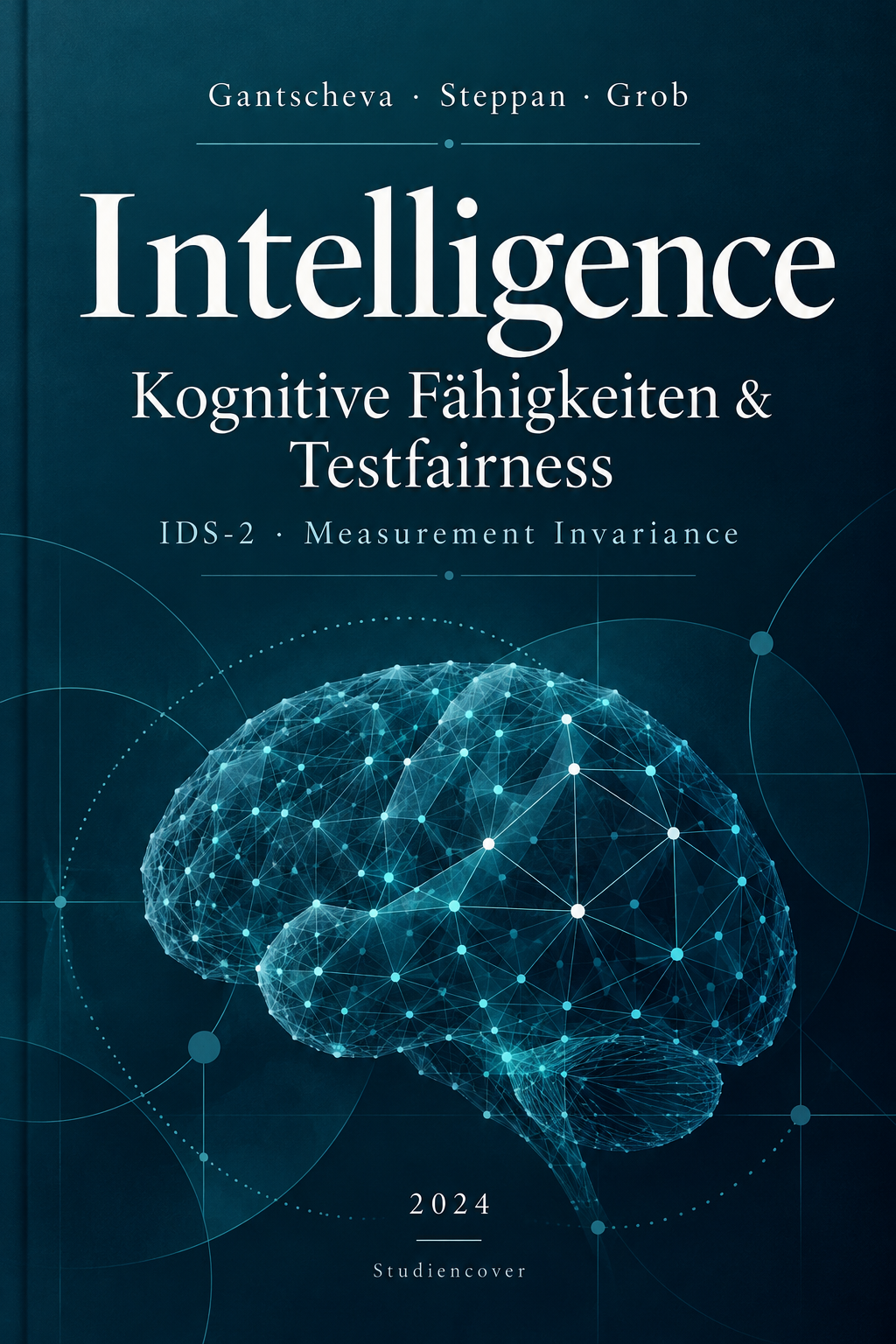
Designed study cover: Intelligence — cognitive abilities and test fairness

Our study in Intelligence examines whether the IDS-2 measures comparably in children and adolescents with and without a migrant background. It shows that linguistically demanding subtests may disadvantage participants with a migrant background.

The findings highlight the importance of language-free, culturally fair methods for assessing cognitive abilities — a key consideration in developing and selecting assessments.

The study concerns children and adolescents. It supports the need for language-free tests; it did not validate a new language-free assessment.

Gantscheva, L., Steppan, M., & Grob, A. (2024). Investigating measurement invariance of the IDS-2 intelligence scales between migrant and non-migrant groups. Intelligence, 107, 101873.

Read the Intelligence study

Designed study cover for the journal publication.
AI & EMOTION RECOGNITION · 2024

Exploring emotional expression with AI.

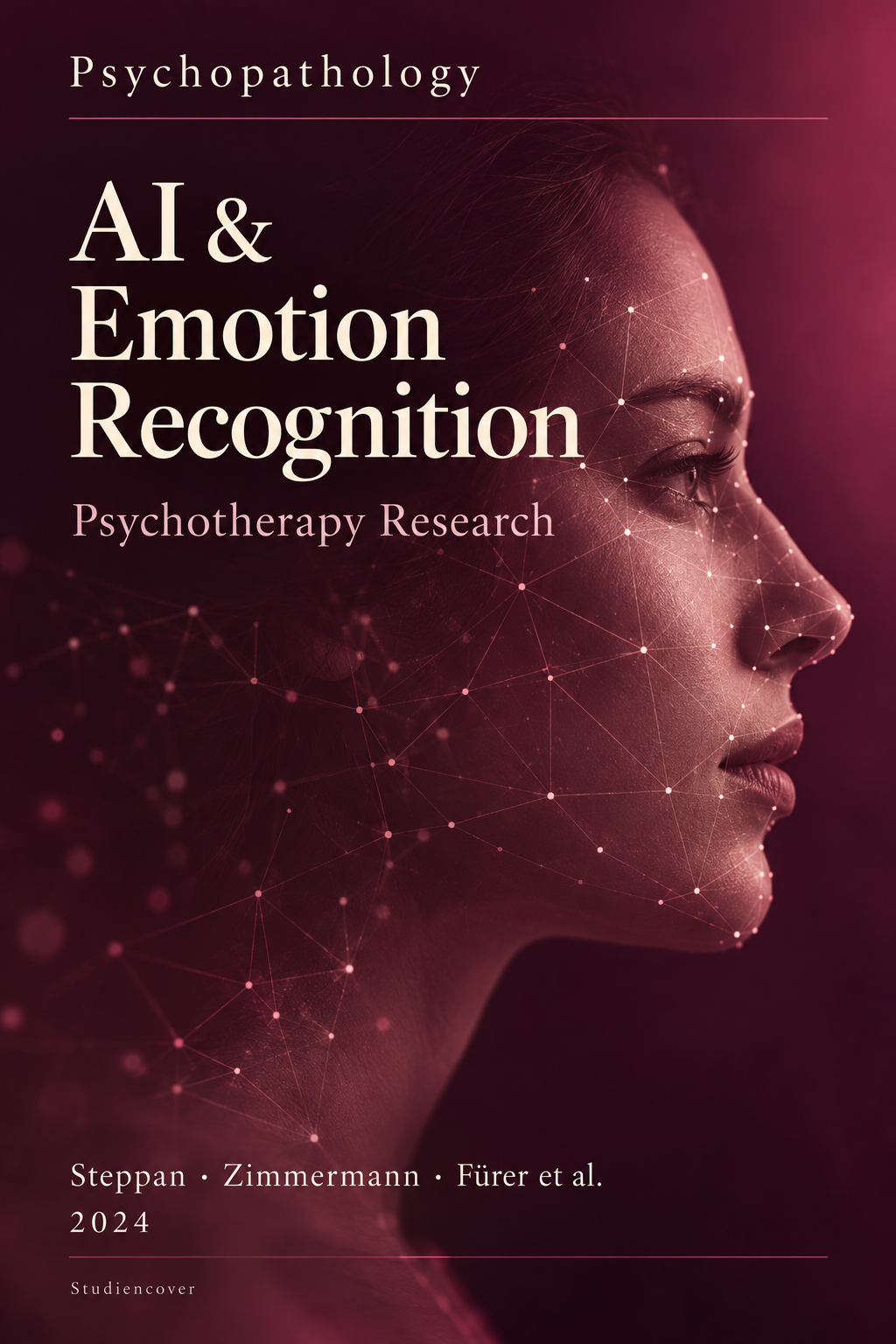
Designed study cover: Psychopathology — AI & Emotion Recognition

Our study in Psychopathology examines AI-based facial expression analysis in psychotherapy research. Automated emotion classifications were compared with human ratings in 389 sessions involving 23 patients.

The work shows how video data can support research on emotional expression and highlights the importance of carefully evaluating AI methods.

A feasibility study in a clinical context. The findings do not validate emotion recognition for employment decisions.

Steppan, M., Zimmermann, R., Fürer, L., et al. (2024). Machine Learning Facial Emotion Classifiers in Psychotherapy Research: A Proof-of-Concept Study. Psychopathology, 57(3), 159–168.

Read the Psychopathology study

Read the University of Basel article

Designed study cover for the journal publication.
RESEARCH IN THE MEDIA

Our research in the public conversation.

Documentaries and media coverage of our research on artificial intelligence and psychology.

CONTACT

What would you like to
learn about people?

Tell me briefly about your question. Together we can discuss how I can support you as a freelance consultant.

mhsteppan@googlemail.com
Privacy for contact enquiries

Your details are sent to Martin Steppan by email to process your enquiry. Please do not send personal employee or health data. You can request access or deletion through the email address provided. This page uses no analytics or marketing cookies.

REFERENCES

Projects, research & publications

Selected publications

  1. meinBeruf.ch: psychometrics and fairness in career matching

    Steppan, M., Jogho, G., Ruchti, I., & Hell, B. (2026). Psychometric evaluation of the AI-based career matching platform meinBeruf.ch: Evidence for reliability, construct validity, and gender fairness. Psychological Test Adaptation and Development, 7, 289–295. Read the study (DOI) · Full text in the FHNW repository

  2. Absenteeism Report 2013

    Badura, B., Ducki, A., Schröder, H., Klose, J., & Meyer, M. (Eds.). (2013). Absenteeism Report 2013: Condemned to succeed — an addicted working society? Springer. With a contribution by Martin Steppan, Tim Pfeiffer-Gerschel and Jutta Künzel. View the book at Springer

  3. Language-free assessments: cognitive abilities and test fairness

    Gantscheva, L., Steppan, M., & Grob, A. (2024). Investigating measurement invariance of the IDS-2 intelligence scales between migrant and non-migrant groups. Intelligence, 107, 101873. Read the study (DOI) · Full text in the University of Basel repository